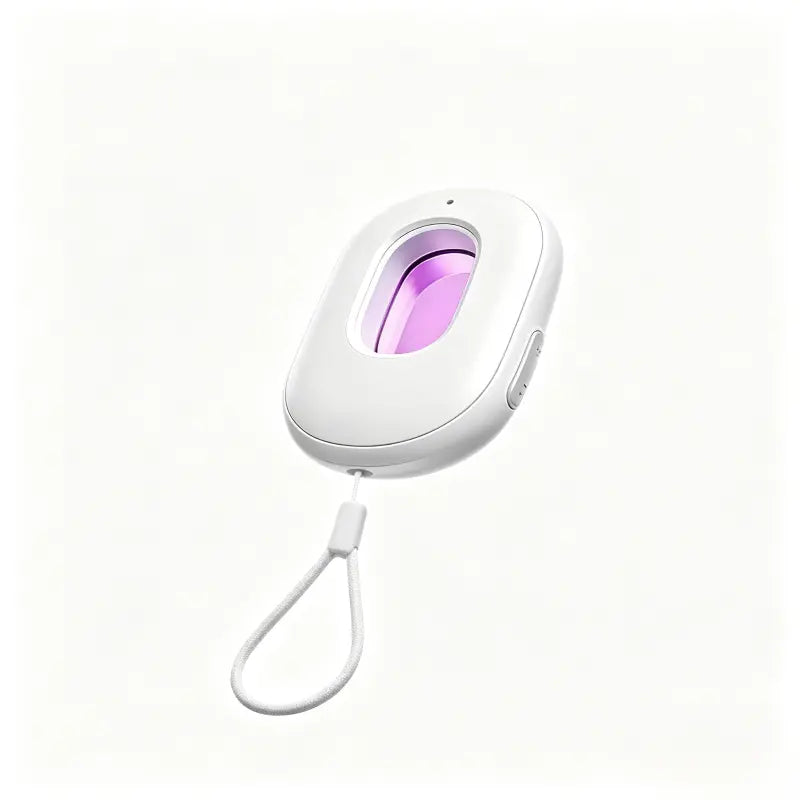
🎀2026 Upgraded 2nd Gen Hidden Camera Detector – Infrared Lens Finder with 3D Spatial Detection Chip
🎀2026 Upgraded 2nd Gen Hidden Camera Detector – Infrared Lens Finder with 3D Spatial Detection Chip


No se pudo cargar la disponibilidad para recogerlo
-
Pedido
- - -
Pedido listo
- - -
Entregado

🎀2026 Upgraded 2nd Gen Hidden Camera Detector – Infrared Lens Finder with 3D Spatial Detection Chip
Scan First. Sleep with Confidence. 2026 Upgraded 2nd Gen Hidden Camera Detector — 3D Spatial Detection Chip — Infrared Lens Finder with Optical Filter — Vibration Alarm — 3 Detection Modes. For Hotels, Airbnb & Travel.
Introducing the 2026 Upgraded 2nd Gen Hidden Camera Detector — a 3-in-1 portable privacy protection device that combines an infrared lens finder with an optical filter and a 3D spatial detection chip to identify concealed cameras in hotel rooms, Airbnb rentals, bathrooms, dressing rooms, and any space where privacy cannot be assumed. In addition to the camera detection function, the device includes a vibration sensor alarm that attaches to door handles, window locks, or luggage zippers and triggers an immediate loud buzzer when tampered with — providing an active security layer while you sleep. The sound and light dual alert system ensures the alarm is effective in noisy and dark environments. Compact and palm-sized with an adjustable lanyard, it packs without adding meaningful weight to any travel bag.
🔍 Infrared Lens Finder · 🧠 3D Spatial Detection Chip · 🚨 Vibration Alarm · 🔆 Sound & Light Dual Alert · 🎒 Portable Lanyard Design · 🏨 Hotels, Airbnb & Travel

🔍 How the 3D Spatial Detection Chip & Infrared Lens Finder Work.

🚨 3 Detection Modes. 1 Palm-Sized Device.

🏨 What This Device Changes About Staying Somewhere New.

🔍 Room Check Protocol: Scan, Hang, Sleep.

- Enter the Room and Power On the Device — Switch on the device and select infrared scanning mode before beginning the room inspection — allow 5–10 seconds for the infrared emitter to reach stable output before beginning the scan — dim the room lighting if possible to improve contrast between genuine lens reflections and background surface reflections — the scan is most effective when performed before unpacking or disturbing any objects in the room, as placement of personal items can obstruct concealed lens locations.
- Scan All High-Risk Locations — Hold the device approximately 20–40cm from each suspected location and look through the optical filter viewing aperture while directing the infrared beam at the object — scan methodically: smoke detectors and ceiling fixtures first, then wall-mounted objects (clocks, picture frames, artwork), then electrical outlets and wall plates, then furniture surfaces (TV units, bedside tables, shelving), then bathroom fixtures (showerheads, ventilation grilles, mirrors) — any object that produces a bright point of reflected light through the filter aperture warrants closer inspection — move within 5–10cm for confirmation of suspicious reflections.
- Inspect Suspicious Reflections at Close Range — When a bright reflection is detected, move the device to within 5cm of the suspect location and scan at multiple angles — a genuine camera lens will maintain its retroreflective signature across multiple angles of incidence; ordinary reflective surfaces such as metal fittings, glass decorations, and LED indicator lights will produce different reflection patterns at varying angles — if the reflection is consistent with a camera lens at close range, treat the object as a confirmed suspicious finding and report it to the property management and, if warranted, local law enforcement.
- Activate Vibration Alarm on Door Handle — After completing the room scan, switch to vibration alarm mode and loop the adjustable lanyard over the interior door handle so the device hangs at a height where any contact with the handle will produce a detectable vibration — test the sensitivity by gently touching the handle from the outside to confirm the alarm triggers — if the alarm does not trigger with light contact, reposition the device lower on the handle or adjust the lanyard length to increase contact sensitivity — the alarm remains active for the duration of the battery charge without requiring attention from the user.
- Secure Windows and Luggage as Needed — For rooms with accessible window latches, attach the device to the window handle using the lanyard in the same manner as the door — the vibration sensor will alert on contact with the window handle from outside — for luggage security, loop the lanyard through a zipper pull on the primary bag compartment — any contact with the zipper during storage in the room or during transit will trigger the alarm — the device can only be attached to one point at a time; prioritize the main room entry door for overnight protection.
- Repeat the Scan Protocol on Each Stay — Perform the full infrared scan on arrival at every new property — the scanning protocol takes under 5 minutes once familiar with the device and covers the complete list of common concealment locations — the vibration alarm provides continuous passive protection for the duration of each stay without requiring any adjustment after initial setup — replace the battery before extended trips if the current charge is uncertain.
— Dim the room before scanning — visible light competes with the infrared reflection and makes genuine lens hits harder to distinguish in brightly lit environments.
— Scan slowly — move the beam across each object surface over 2–3 seconds rather than sweeping rapidly — rapid movement can cause genuine reflections to be missed in the visual field.
— The bathroom is the highest-risk area in rental accommodation — give it the same thoroughness as the bedroom and pay particular attention to showerheads, towel hooks, and vent grilles.
— Not all bright reflections are cameras — LED indicator lights, reflective decorations, and glass surfaces can produce bright returns — close-range inspection at multiple angles confirms whether a reflection is consistent with a camera lens.
Product Details
| Feature | Detail |
|---|---|
| Product | 2026 Upgraded 2nd Gen Hidden Camera Detector |
| Generation | 2nd generation · 2026 upgraded model |
| Detection Technology | Optical filter + infrared spectrum scanning + 3D spatial detection chip |
| Detection Modes | 3 modes: infrared scanning · vibration alarm · privacy protection |
| Alert System | Sound & light dual alert · loud buzzer + flashing red LED |
| Vibration Sensor | Pulse vibration sensor · tamper detection for doors, windows & luggage |
| Flashlight | Integrated LED flashlight |
| Battery | Long battery life · suitable for extended trips |
| Size | Approx. 1.57″ × 2.36″ (4cm × 6cm) · palm-sized |
| Design | Compact · lightweight · adjustable lanyard included |
| Lanyard Use | Door handles · window locks · luggage zippers |
| Best For | Hotels · Airbnb · home · office · bathroom · dressing rooms · travel |
Common Questions, Answered
Can this detect cameras that are turned off or not transmitting?
Yes — the infrared lens finder detects the physical optical lens of a camera rather than any signal, transmission, or wireless activity from the device. A camera lens is retroreflective regardless of whether the camera is powered, recording, or transmitting — the curved optical elements of the lens reflect the infrared beam back toward the detector in a distinctive pattern that is present as long as the lens is physically there. This is a significant advantage over RF (radio frequency) detectors, which only detect cameras that are actively transmitting a wireless signal and cannot detect wired cameras, cameras using encrypted transmission, or cameras in standby mode.
Will the vibration alarm trigger from normal room sounds or building vibration?
The vibration sensor is calibrated to respond to the mechanical vibration pattern of physical contact with the attachment point — specifically the impulse vibration of a door handle being touched, grabbed, or turned rather than to ambient sound, music, building HVAC vibration, or normal room noise. Ordinary room sounds and environmental vibration have a different frequency and amplitude signature from direct physical contact with the device attachment point. False triggers can occur if the device is attached to a surface that transmits high-amplitude structural vibration — thin interior doors with resonant panels are more prone to this than solid-core doors. If false triggers occur, reposition the device further down the door handle where contact vibration is more localized.
Is this effective in fully lit rooms?
The device works in lit environments but detection accuracy is higher in dimmed conditions. Visible light in the environment creates reflections from metal fittings, glass surfaces, and decorative elements that can compete visually with the infrared reflection from a camera lens when viewed through the optical filter. Dimming the room before scanning — or scanning during evening hours when ambient light is naturally lower — produces a higher-contrast result that makes genuine lens reflections easier to identify with confidence. In fully lit rooms, slow and methodical scanning combined with close-range verification of any suspicious reflection is the recommended approach.
What should I do if I find a suspicious reflection that might be a camera?
Do not touch, move, or cover the suspected device — doing so can destroy evidence and may alert the person monitoring the camera. Document the location with your smartphone camera. Leave the room immediately and contact the property manager or front desk. If the property manager is the suspected party or is unresponsive, contact local law enforcement directly — hidden cameras in accommodation are illegal in most jurisdictions and constitute a serious privacy violation. Do not continue to occupy the room until it has been physically inspected by a qualified party. Most jurisdictions have specific laws covering surveillance in private spaces that provide the basis for formal complaint.
Is this suitable as a gift?
Yes — the hidden camera detector is a practical, thoughtful gift for frequent travelers, solo female travelers, business travelers, and anyone who regularly stays in hotels or short-term rentals. The device addresses a genuine and growing concern without requiring technical knowledge to operate — the 3-step scan protocol is intuitive and produces immediate, visible results. The compact size and lanyard design mean it packs easily and travels everywhere. A gift that addresses personal safety tends to be well-remembered and used consistently — this is a more durable and practically valued gift than most travel accessories.
Scanned the Room. Found Something. Never Traveling Without It Again.
“I bought this before a solo trip to Southeast Asia after reading about hidden cameras in Airbnb properties. I expected to find nothing and to feel slightly paranoid about the whole exercise. In the third property I stayed in, the scan produced a bright reflection from a smoke detector in the bedroom that I couldn’t explain — different from everything else in the room. I reported it to the host, who initially denied any issue. The local platform support eventually confirmed a camera had been installed. I have never been more grateful for a $30 device. I check every room now, every time, as standard arrival routine.”
“I travel for work about 150 nights a year, mostly hotels. I’ve used cheaper infrared detectors before and they were useless — everything produced a reflection and you couldn’t tell what was relevant. The optical filter on this one is genuinely different — the background noise disappears and camera lens reflections stand out clearly. I use it to scan every hotel room on arrival as a standard check. Takes about 4 minutes. The vibration alarm on the door handle is a bonus — I sleep better knowing it’s there, especially in hotels with keycards that can be duplicated. Solid, well-built device.”
“Bought this for my daughter who travels solo for her job. She was initially dismissive but agreed to try it. She now scans every room she stays in and has sent the device to two of her colleagues who asked where she got it. The door alarm feature is what she uses most — she says it’s changed how she sleeps in unfamiliar hotel rooms because she knows she’ll be alerted if anyone tries to enter. As a parent sending a young woman to travel alone, having a device that covers both surveillance detection and physical intrusion alert is exactly what I was looking for. The compact size and lanyard design are well-thought-out.”
Shop with Confidence
Questions? Contact us anytime — we’re here to help.
For personal privacy protection use only · Not intended for law enforcement or professional surveillance counter-measure applications · Detection effectiveness varies by camera lens design and concealment method.