Zu Produktinformationen springen

🎀Aomimegel Intensive Repair Hair Mask – Argan Oil & Keratin Protein

🎀Aomimegel Intensive Repair Hair Mask – Argan Oil & Keratin Protein

 Ausgezeichnet(987 Bewertungen)
Über 100 Bestellungen
in den letzten 24 Stunden
3026+
Zufriedene Kunden
Normaler Preis $26.99 USD
Normaler Preis $26.99 USD Verkaufspreis
SPARES [Prozentsatz] Ausverkauft
 
in_den_einkaufswagen

-

Bestellt

lokale_zustellung

**- - -**

Bestellung fertig

einlösen

**- - -**

Geliefert

🎀Aomimegel Intensive Repair Hair Mask – Argan Oil & Keratin Protein

🎀Aomimegel Intensive Repair Hair Mask – Argan Oil & Keratin Protein

Normaler Preis $26.99
Normaler Preis $26.99 Verkaufspreis
SPARES [Prozentsatz] Ausverkauft
Aomimegel — Spa Level Luxury Hair Care
“The hair shaft is composed of three concentric layers — the medulla at the core, the cortex that provides the majority of the hair’s structural strength and color, and the cuticle at the surface: a layer of overlapping, scale-like cells that lie flat and tight against the cortex when the hair is healthy and lift, crack, and erode when the hair is damaged. The cuticle is the single most important structural determinant of how hair looks and feels: flat, tightly overlapping cuticle scales produce the light-reflective surface that reads as gloss and shine; lifted, damaged cuticle scales produce the rough, porous surface that reads as frizz, dullness, and unmanageability. Every major damaging process — heat styling, bleaching, oxidative coloring, chemical straightening, mechanical tension from brushing — damages the cuticle by the same basic mechanism: disrupting or dissolving the disulfide bonds and the lipid F-layer on the cuticle’s surface that hold the scales flat. An intensive repair mask formulated with keratin proteins, conditioning lipids, and structural peptides addresses damaged hair by targeting the three things that hold the cuticle flat: the protein structure, the lipid surface seal, and the moisture content of the cortex.”

Deep Repair. Intense Hydration. Silky, Glossy Finish. Aomimegel Intensive Repair Hair Mask — 300ml — Argan Oil + Royal Jelly + Hydrolyzed Keratin + Oat Peptides — +91.5% Soft, Light & Shiny — +83.2% Soften Dryness & Frizz.

The Aomimegel Intensive Repair Hair Mask is a deep-conditioning treatment formulated for dry, frizzy, color-treated, and chemically damaged hair. The rich yet lightweight formula combines Argan Oil (Moroccan argan essence for healthy shine), Royal Jelly (deep nourishment and vitality), Hydrolyzed Keratin (strengthening and structural repair), and Oat Peptides (moisture balance and smooth softness), supported by Collagen and Wheat Protein. The result: hair that is visibly softer, smoother, shinier, and more manageable after each use. Consumer results: +91.5% soft, light & shiny and +83.2% reduction in dryness and frizz. 300ml / 10.15 fl oz. Use 1–2 times per week.

💧 Argan Oil  ·  🌟 Royal Jelly  ·  🧬 Hydrolyzed Keratin  ·  🌾 Oat Peptides  ·  ✨ +91.5% Soft & Shiny  ·  💪 +83.2% Frizz Reduction

Aomimegel Intensive Repair Hair Mask 300ml amber yellow jar argan oil keratin protein moisturizing spa luxury hair care dry frizzy color treated damaged hair
Consumer Results

📊 +91.5% Soft, Light & Shiny. +83.2% Soften Dryness & Frizz. After Consistent Use.

+91.5%Reported improvement in softness,
lightness & shine after consistent use
+83.2%Reported reduction in dryness
& frizz after consistent use
💡 About the Results Data: The +91.5% and +83.2% figures are consumer-reported results reflecting perceived improvement in hair quality after consistent use of the Aomimegel Intensive Repair Hair Mask. Individual results vary based on hair type, pre-existing damage level, application frequency (recommended: 1–2 times per week), leave-in time (recommended: 10–15 minutes), and concurrent hair care practices including heat styling frequency and the use of sulfate-based shampoos. For maximum results, use consistently on towel-dried hair after shampooing and allow the full 10–15 minute contact time before rinsing.
4 Core Ingredients

🌟 Argan Oil. Royal Jelly. Hydrolyzed Keratin. Oat Peptides. Four Mechanisms, One Formula.

Aomimegel hair mask 4 core ingredients argan oil royal jelly hydrolyzed keratin oat peptides collagen wheat protein repair nourish strengthen
💧 Argan Oil — The Moroccan Shine IngredientArgan oil is cold-pressed from the kernels of the Argania spinosa tree native to Morocco and is composed primarily of oleic acid (43–49%), linoleic acid (29–36%), and tocopherols (vitamin E) at concentrations of 619–900 mg/kg — the highest tocopherol concentration of any commercially available plant oil — in hair care applications, argan oil functions through three primary mechanisms: the oleic and linoleic acid fatty acids penetrate the hair shaft and supplement the natural lipid content of the cortex that is depleted by oxidative chemical treatments; the tocopherols provide antioxidant protection to the hair lipid fraction, slowing the oxidative degradation of the natural hair oils that causes the brittle, straw-like texture of heat-damaged hair; and the oil’s high refractive index produces a light-reflective surface coating on the cuticle that reads as shine — argan oil is the single most evidence-referenced plant oil for hair shine and lipid replenishment in the professional hair care literature.
🌟 Royal Jelly — Deep Nourishment & VitalityRoyal Jelly is a secretion produced by the hypopharyngeal glands of worker honeybees and used exclusively as the nutritional source for queen larvae — it contains 10-hydroxy-2-decenoic acid (10-HDA), the primary fatty acid unique to Royal Jelly, along with a complete amino acid profile, vitamins B1, B2, B3, B5, B6, B8, B9, C, and a range of mineral cofactors — the 10-HDA component has documented biological activity including keratinocyte proliferation stimulation, which is the cellular mechanism underlying Royal Jelly’s use in vitality-focused cosmetic formulations — in a hair mask application, Royal Jelly contributes the amino acid and vitamin complex that supports the health of the scalp keratinocytes responsible for producing the hair fiber, and its humectant properties draw and retain moisture in the hair shaft cortex — Royal Jelly’s use in hair care positions the formula at the premium end of the conditioning ingredient spectrum, providing a nourishment-and-vitality benefit that most conditioning masks formulated with synthetic silicones and quaternary ammonium compounds do not attempt.
🧬 Hydrolyzed Keratin — Structural Repair at the Protein LevelKeratin is the primary structural protein of the hair fiber — accounting for approximately 65–95% of the dry weight of the hair shaft — it is a fibrous protein built from a right-handed alpha-helix structure stabilized by disulfide bonds between cysteine residues — chemical damage (bleaching, permanent color, relaxers) breaks these disulfide bonds through oxidative chemistry, which is what allows the treatments to alter hair color and shape but simultaneously degrades the protein scaffold that gives healthy hair its tensile strength and elasticity — Hydrolyzed Keratin is keratin that has been partially hydrolyzed into smaller peptide fragments — the hydrolysis reduces the molecular weight to the range (less than 1,000 daltons) that allows penetration through the raised, porous cuticle of damaged hair into the cortex, where the peptide fragments can temporarily fill the protein voids left by bond breakage, restoring some of the tensile strength and smoothness that chemical processing removed — hydrolyzed keratin is the most mechanistically appropriate ingredient for repairing protein-damaged hair because it replaces the same protein type that was removed, rather than coating the exterior surface with a film-forming agent that masks the damage without addressing it.
🌾 Oat Peptides — Moisture Balance & Smooth SoftnessOat-derived peptides (hydrolyzed oat protein) are produced by hydrolyzing the globulin proteins of Avena sativa — avenin and avenalins — into peptide fragments of approximately 500–2,000 daltons — oat peptides are amphiphilic, meaning they have both hydrophilic and hydrophobic molecular regions, which gives them two simultaneous functions in a hair care formulation: the hydrophilic regions attract and bind water molecules, providing the direct humectant hydration benefit; the hydrophobic regions adsorb to the hydrophobic surface of the hair cuticle, creating a moisture-retaining film that slows the rate of water loss from the hair shaft after rinse-out — the net result is a sustained moisture effect that persists after drying, rather than the temporary moisture effect of water-based conditioning agents that evaporate as the hair dries — oat peptides also have documented film-forming properties on the cuticle surface that contribute to the smoothness and anti-frizz benefit by providing a thin, flexible coating that holds raised cuticle scales in a flatter orientation.
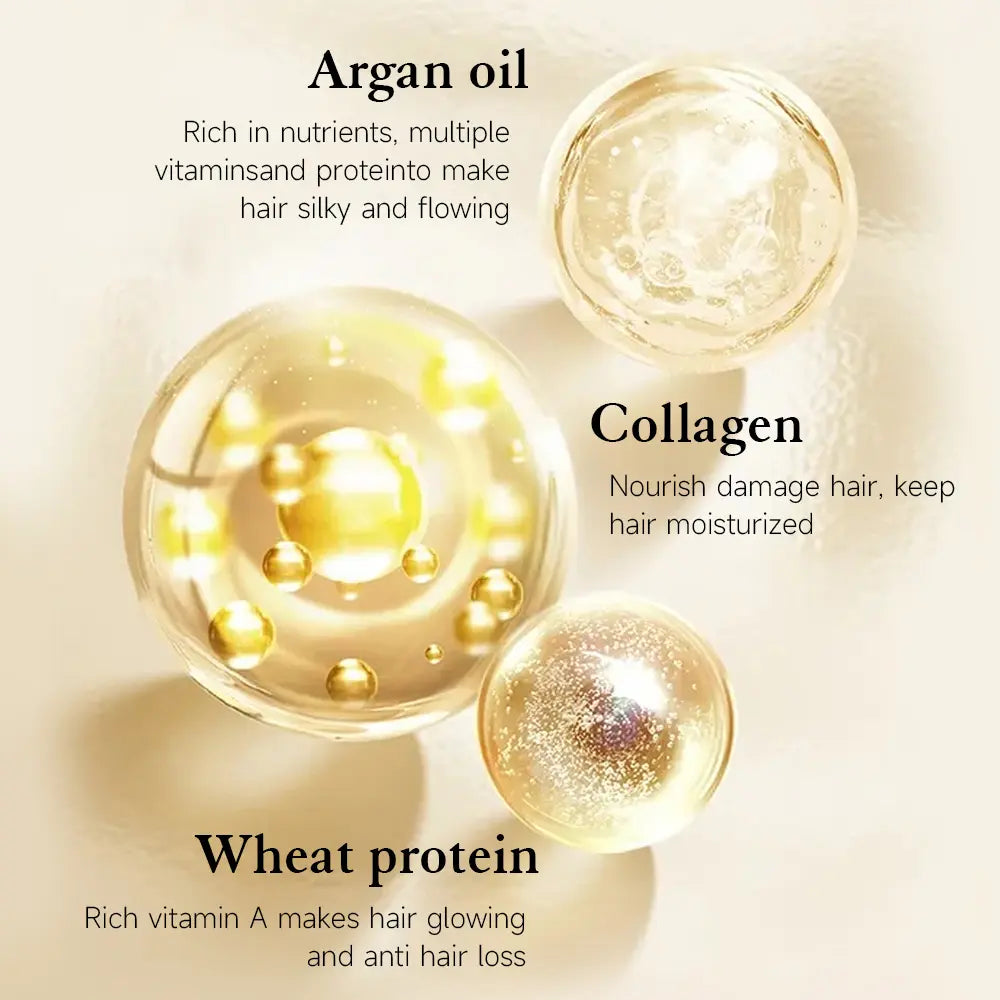
🧠 Collagen — Nourish & MoisturizeHydrolyzed Collagen in hair care is produced by hydrolyzing bovine or marine collagen into small peptide fragments — typically under 2,000 daltons — collagen peptides applied to the hair surface provide a film-forming and moisture-binding function similar to oat peptides: the peptide chains adsorb to the cuticle surface and attract water via their abundant hydrophilic amino acid residues (glycine, proline, hydroxyproline) — the result is a smoothing, nourishing surface film that improves the tactile feel and appearance of the hair while providing a moisture-retention benefit — collagen is particularly effective on dry, brittle hair where the natural moisture content of the cortex has been depleted by chemical or thermal processing, as the collagen peptide film provides both an immediate textural improvement and a sustained moisture-trapping function.
🌿 Wheat Protein — Gloss & StrengthHydrolyzed Wheat Protein is produced by alkaline or enzymatic hydrolysis of wheat gluten into peptide fragments — the fragments are primarily glutamine and proline-rich peptides from the gliadin and glutenin proteins of wheat — wheat protein has a strong affinity for damaged hair due to the electrostatic attraction between the protein’s positively charged amino groups and the negatively charged sites on chemically damaged cuticle surfaces — this electrostatic adsorption mechanism causes wheat protein to deposit preferentially on the most damaged areas of the hair shaft, effectively concentrating the protein repair benefit at the sites of greatest damage — the vitamin A content referenced in the listing contributes to the scalp environment supporting hair growth by participating in keratinocyte differentiation regulation — wheat protein is also a film former that contributes to gloss by smoothing the cuticle surface and providing a refractive coating.
Why Damaged Hair Needs More Than Conditioner

🔬 The Cuticle. The Cortex. The Disulfide Bond. Why Heat & Color Damage Requires Targeted Repair.

Hair damage anatomy cuticle lift heat bleach color chemical damage disulfide bond breakage frizz dryness split ends breakage dry frizzy damaged hair
🔥Heat Styling DamageFlat irons and blow dryers above 230°C denature the alpha-keratin helices in the cortex and volatilize the natural moisture content of the hair shaft, leaving the cortex dehydrated and the cuticle scales lifted and brittle — repeated heat styling compounds these effects with each session
Bleaching & Color DamageHydrogen peroxide in bleach and oxidative hair color enters the cortex and breaks the disulfide bonds between keratin chains via oxidation — this is what allows color molecules to enter and alter the melanin — but the same oxidative chemistry also degrades the keratin protein scaffold and the lipid F-layer on the cuticle surface, leaving the hair structurally weakened
🧪Chemical Treatment DamageRelaxers and permanent wave solutions use thioglycolate or sodium hydroxide to break and reform disulfide bonds, permanently altering the hair’s shape — these processes leave the hair’s protein structure significantly compromised at the treated lengths, which is why chemically relaxed and permed hair requires ongoing intensive conditioning to maintain integrity
🌪️Environmental & Mechanical DamageUV radiation degrades the hair’s melanin and surface lipids; hard water mineral deposits disrupt the cuticle seal; mechanical friction from brushing, towel-drying, and pillow contact abrades the cuticle scales — environmental damage accumulates slowly but is present across all hair types regardless of chemical treatment history
💧Moisture DepletionHealthy hair contains approximately 10–15% water by weight; damaged hair loses moisture faster due to the disrupted cuticle seal and depleted cortex lipids — below approximately 8% moisture content, hair becomes brittle and prone to breakage — maintaining cortex moisture is the primary goal of intensive conditioning treatments
🫧Split Ends & BreakageSplit ends (trichoptilosis) occur when the cuticle on the terminal section of the hair shaft has been completely eroded by cumulative damage, allowing the cortex fibers to separate longitudinally — once the cuticle is gone, the cortex fibers have no mechanical protection and separate at the point of least cross-link density — intensive protein and lipid replenishment slows the progression of split ends and strengthens the cortex to reduce mid-shaft breakage
Argan Oil — The Moroccan Essence

💧 Oleic Acid. Linoleic Acid. Tocopherols at 619–900 mg/kg. Why Moroccan Argan Oil Is the Gold Standard for Hair Shine.

🌲
Argania Spinosa — The SourceArgan trees grow exclusively in a UNESCO Biosphere Reserve in southwestern Morocco — the 8–10 hour cold-pressing process of the dried kernels produces the oil without the denaturing effect of heat that degrades the tocopherol and fatty acid profile — cold-pressed argan oil retains the complete active fraction that gives the oil its documented hair care efficacy
💧
Fatty Acid ProfileOleic acid (C18:1) at 43–49% provides the primary lipid penetration and cortex conditioning benefit — linoleic acid (C18:2) at 29–36% contributes to the anti-inflammatory and barrier-reinforcing properties — both fatty acids are the same carbon-chain length as the natural hair lipids lost through chemical processing, allowing direct integration into the hair’s lipid matrix
Tocopherols — The Antioxidant FractionAt 619–900 mg/kg, argan oil contains the highest tocopherol (vitamin E) concentration of any commercially available plant oil — tocopherols protect the applied lipid fraction and the hair’s natural oils from oxidative degradation — they are the reason argan oil-treated hair maintains its shine and softness for days after application rather than reverting to dullness as the conditioning agents dissipate
🌟
The Shine MechanismArgan oil’s high refractive index and its ability to smooth and fill the gaps in the cuticle surface create the specular light reflection that reads as gloss and shine — damaged cuticle scales diffuse rather than reflect light, producing the matte, dull appearance of damaged hair — the oil’s surface-smoothing effect converts diffuse reflection to specular reflection, which is the optical mechanism behind the +91.5% shine improvement in consumer results
How to Use

🪥 Shampoo. Apply. Leave 10–15 Minutes. Rinse. The Correct Technique for Maximum Repair.

Aomimegel hair mask how to use towel dried hair apply mid lengths to ends 10-15 minutes leave in rinse thoroughly blow dry weekly repair treatment
  1. Shampoo First, Then Towel-Dry — The mask is applied to towel-dried hair after shampooing, not to dry hair before washing — the shampoo step opens the cuticle slightly and removes the surface sebum and product buildup that would otherwise prevent the mask’s keratin peptides and conditioning lipids from penetrating to the cortex — towel-dry to remove excess water: the hair should be damp, not dripping — water-saturated hair has less absorption capacity for conditioning agents because the water in the cortex competes with the mask ingredients for the available absorption sites.
  2. Apply from Mid-Lengths to Ends — Not Roots — Distribute the mask evenly from mid-lengths to ends, which are the zones of the hair shaft that have accumulated the most cumulative damage — avoid applying directly to the scalp and roots: the scalp’s natural sebum production provides conditioning at the root zone, and applying a rich mask to the scalp may contribute to buildup, greasiness, and potential follicle occlusion — use your fingertips to distribute the product in downward strokes following the direction of the cuticle scales, which encourages the scales to lie flat rather than lifting further during the application process.
  3. Leave for 10–15 Minutes — The Penetration Window — The 10–15 minute contact time is the window during which the hydrolyzed keratin peptides and conditioning lipids migrate from the product surface through the raised cuticle into the cortex — the contact time is the most important variable in mask efficacy: rinsing at 3–5 minutes removes the mask before the protein and lipid penetration phase is complete, capturing only the surface-conditioning effect — a warm towel or shower cap over the hair during the contact time creates a gentle heat environment that further opens the cuticle and accelerates penetration — do not exceed 30 minutes, as over-conditioning with protein-rich treatments can produce a stiffening effect in very fine hair.
  4. Rinse Thoroughly with Cool or Lukewarm Water — Rinse completely — product residue left in the hair after rinse-out coats the cuticle and creates buildup that weighs the hair down and reduces shine over successive applications — rinse with cool or lukewarm rather than hot water: hot water raises the cuticle again after the mask has smoothed it, partially reversing the smoothing and shine benefit that the mask’s contact period established — cool water closes the cuticle and seals the conditioning agents and peptides inside the cortex, locking in the treatment benefit.
  5. Blow-Dry or Air-Dry — Both Are Compatible — The mask is compatible with both air-drying and blow-drying — if blow-drying, use a heat protectant over the treated hair before applying heat, as the proteins and lipids deposited by the mask are heat-sensitive and benefit from a thermal protection layer — the smoothed cuticle surface created by the mask means blow-dried hair will be easier to smooth with a brush than untreated hair, requiring less heat exposure time per section to achieve the same smooth result.
  6. Use 1–2 Times Per Week — Consistency Compounds Results — Consistent weekly or twice-weekly application compounds the repair benefit: each treatment cycle deposits keratin peptides, replenishes cortex lipids, and progressively normalizes the moisture content of the hair shaft — the consumer result data (+91.5% soft, light & shiny; +83.2% dryness and frizz reduction) reflects consistent use over time, not single-application results — the visible improvement in hair quality is cumulative and becomes most apparent after 4–6 weeks of consistent twice-weekly application.
💡 Application Tips:
Warm towel or shower cap during the 10–15 minute contact time opens the cuticle and accelerates keratin peptide penetration.
Mid-lengths to ends only — avoid the scalp and root zone to prevent buildup and greasiness.
Cool rinse water closes the cuticle and seals the treatment benefit inside the cortex.
Don’t over-apply — a generous but not excessive amount covers all damaged lengths — excess product sits on the surface and rinses away without contributing additional benefit.
Pair with a sulfate-free shampoo on wash days to minimize cuticle disruption from the shampoo step, preserving more of each mask treatment’s deposited protein and lipid benefit between applications.
Before & After

✨ The Transformation. Frizzy to Silky. Dull to Glossy. Brittle to Bouncy.

🔍
Frizz → SmoothFrizz is the visual result of raised, irregular cuticle scales that catch ambient humidity and expand unevenly — the keratin protein fills and the oat peptide film smooth these scales into a more uniform surface, reducing humidity-driven expansion and the chaotic, cloud-like hair silhouette that frizz-prone hair produces in humid conditions
💆
Dull → GlossyDullness is caused by diffuse light scattering from an irregular cuticle surface — the argan oil and collagen surface coating converts this diffuse scattering to the specular (mirror-like) reflection that reads as gloss — the shift from matte to glossy appearance is visible in the first use and intensifies with continued application as the protein and lipid treatment progressively normalizes the cuticle surface
💃
Brittle → ElasticBrittleness is caused by protein structure loss and moisture depletion in the cortex — the hydrolyzed keratin deposits protein fragments that temporarily restore some of the cortex’s structural integrity, and the oat peptide and collagen moisture-retention complex normalizes the cortex water content back toward the 10–15% range of healthy hair — the combination produces an increase in elasticity: the hair bends without snapping rather than breaking at the first point of tension
✈️
Heavy → LightweightOver-processed hair that has been treated with silicone-heavy conditioners accumulates coating buildup that makes it feel heavy, limp, and flat — the aomimegel formula’s “rich yet lightweight” character comes from using protein peptides and natural lipids rather than high-molecular-weight silicones as the primary conditioning agents — protein and natural lipid conditioning penetrates rather than coats, leaving hair that feels nourished and light rather than coated and heavy
Specifications

Product Details

Feature Detail
Brand Aomimegel
Product Intensive Repair Hair Mask
Volume 300ml / 10.15 fl oz
Primary Actives Argan Oil · Royal Jelly · Hydrolyzed Keratin · Oat Peptides
Supporting Actives Collagen · Wheat Protein
Consumer Results +91.5% soft, light & shiny · +83.2% reduction in dryness & frizz
Use Frequency 1–2 times per week
Leave-in Time 10–15 minutes
Application Towel-dried hair · Mid-lengths to ends · After shampooing
Hair Types Dry · Frizzy · Color-treated · Chemically damaged · Heat-styled · Wavy · Curly
Formula Rich yet lightweight · Deep-penetrating · Rinse-out treatment
Origin Moroccan Argan Essence · Spa-level luxury hair care
FAQ

Common Questions, Answered

Can I use this mask every day?

The recommended frequency is 1–2 times per week, not daily. This is because the formula contains protein-based actives (Hydrolyzed Keratin, Wheat Protein, Oat Peptides) and daily protein application can cause protein overload in hair — particularly fine hair — producing a stiff, brittle, and paradoxically more breakage-prone result as the protein deposits build up on the cuticle surface without the moisture balance that weekly application allows the hair to maintain between treatments. For very dry or severely damaged hair, twice-weekly application is the upper end of the recommended frequency — on non-mask wash days, use a standard rinse-out conditioner rather than the intensive mask.

Is this suitable for color-treated hair?

Yes. The formula is specifically designed for color-treated hair. The hydrolyzed keratin and conditioning lipids address the structural protein damage that oxidative coloring causes without containing any stripping or clarifying agents that would accelerate color fading. For freshest results with color-treated hair, wait 48–72 hours after a fresh color treatment before the first mask application, to allow the hair’s cuticle (which is forced open during coloring) to fully close and the color molecules to stabilize in the cortex before intensive conditioning treatment is applied.

Can I leave it on longer than 15 minutes?

You can extend the contact time to 20–25 minutes for a more intensive treatment without adverse effects for most hair types. However, for fine or low-porosity hair, extending beyond 15 minutes may produce an over-conditioning effect where the protein deposits accumulate on the cuticle surface faster than they can be absorbed, leading to a limp, heavy feeling after rinse-out. The 10–15 minute window is the contact time at which the hydrolyzed keratin and oat peptide penetration is substantially complete for normal to high porosity (damaged) hair, so extending significantly beyond this range adds diminishing returns for the penetration benefit even as it increases the surface-coating effect.

Should I use a conditioner after the mask?

For most hair types, no — the mask functions as an intensive conditioner and provides the same cuticle-smoothing and moisture-sealing function that a rinse-out conditioner provides, at a higher concentration and with additional protein repair actives. Layering a conditioner over the mask after rinse-out adds unnecessary product and may contribute to the buildup and heaviness that the mask’s lightweight protein-and-lipid formula is designed to avoid. For very dry or severely damaged hair, a small amount of leave-in conditioner or a few drops of argan oil applied to damp hair after rinsing the mask can supplement the mask treatment without creating the buildup associated with layering rinse-out products.

How long does a 300ml jar last?

At the recommended application frequency (1–2 times per week) and a moderate application amount (approximately 15–25ml per application for medium-length hair), a 300ml jar provides approximately 12–20 applications — between 6 and 20 weeks of use depending on application frequency and hair length. For longer hair or twice-weekly application, plan on approximately 6–8 weeks per jar. For shorter hair used weekly, the jar may last 4–5 months. The 300ml size is the recommended “family pack” format for households with multiple users or users with long hair who apply generously.

Customer Reviews

My Bleached Hair Finally Feels Like Hair Again. Fourth Jar and Counting.

★★★★★
Ashley R. Los Angeles, CA

“I have bleached my hair blonde four times in 18 months and it was at the point where it felt like dry grass and broke every time I ran a comb through it. I have tried every Kérastase, Olaplex, and pharmacy mask in the $15–$80 price range. This is the third jar of the aomimegel mask I’ve finished and my hair has gone from what my stylist diplomatically called ‘structurally compromised’ to something she actually complimented at my last appointment. I apply it twice a week with a shower cap for 15 minutes. My biggest change was switching to cool water for the rinse, which someone in a hair care forum told me mattered for masks and I didn’t believe until I tried it. The difference between a hot rinse and a cool rinse on this product is immediately visible in the shine after blow-drying. Buy the 300ml, not the smaller size if there is one. It goes faster than you think when you use it properly.”

★★★★★
Priya K. Chicago, IL

“I have naturally coarse, wavy hair that goes frizzy in humidity to the point where I was flat-ironing every day just to look presentable for work. I was aware that the daily flat-ironing was worsening the damage that was causing the frizz, which was causing me to iron more, which was a cycle I couldn’t break. I started using this mask twice a week for a month before reducing flat-ironing to three times a week. The frizz reduction in that first month was significant enough that I could get away with air-drying on non-iron days without looking like I’d been in a wind tunnel. The key for frizzy hair is the rinse — cool water, no exceptions, and then don’t touch the hair while it’s air-drying. The mask gives the cuticle enough smooth coating that if you let it dry without friction it stays smooth. I’m now ironing once or twice a week instead of daily. My hair is visibly less damaged than it was before I started. That is not a result I expected from a mask at this price.”

★★★★★
Samantha T. New York, NY

“I’m a hairstylist and I started recommending this mask to clients with color-damaged and heat-damaged hair about six months ago after trying it on myself. The ingredient profile (hydrolyzed keratin + argan oil + oat peptide + collagen) is the correct combination for the job: protein for structural repair, lipid for shine and barrier restoration, peptide for moisture retention. What I like most is that it doesn’t leave the silicone coating residue that a lot of masks at this price point rely on — the hair feels genuinely repaired rather than coated, which is the distinction that matters for long-term hair health. The +91.5% shine figure tracks with what I see in clients who use it consistently — you can see the difference in the surface reflection of the hair shaft under salon lighting at consecutive appointments. I’ve stopped recommending the branded salon option I used to use at three times the price.”

Our Promise

Shop with Confidence

💧Argan Oil + KeratinSpa-level repair
📊+91.5% ShineConsumer results
🪥300ml Family Pack10.15 fl oz
🚚Fast ShippingTracked & Insured
↩️Easy ReturnsHassle-Free Policy
🔐Secure CheckoutSSL Encrypted

Questions? Contact us anytime — we’re here to help.

For external use only · Apply to clean hair after shampooing · Avoid contact with eyes · Discontinue if irritation occurs · Results may vary based on individual hair type and condition · Consumer result figures reflect reported experiences and are not a guarantee of individual results · Keep out of reach of children.

Vollständige Details anzeigen